Treatment
Colorectal cancer may be treated by one of the following:
- Radiation Oncologists, treating cancer with radiation
- Medical Oncologist, treating cancer with medicine (usually chemotherapy)
- Gastroenterologist, treats digestive system diseases
- Surgeon
Chemotherapy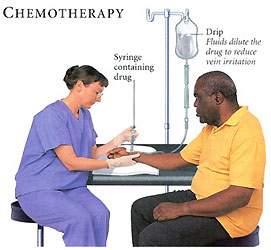
- Primary Chemotherapy - used for advanced colorectal cancer where the infected are is too large to be removed; primary shrinks the size of the tumors
- Adjuvant Chemotherapy - after a person has had the infected area surgically removed he or she undergoes adjuvant chemotherapy; adjuvant destroys cancer cells that were missed in the surgery
- Neoadjuvant Chemotherapy - this is given before a person undergoes surgery in order to shrink the tumor, decreasing complication risks
Chemotherapy drugs may either be given by injection, a pump, or in pill form; the most common form of chemotherapy drug for colorectal cancer are 5-U. Because chemotherapy kills good cells as well as bad the following side affects may occur: nausea, vomiting, loss of appetite, mouth sores, hair loss, rashes, diarrhea, fatigue, and a higher risk of infection.
Surgery
- Bowel Resection - the cancerous part of the colon or rectum is cut off and then the two sections are reattached
- Cryosurgery - liquid nitrogen is used to freeze and kill cancer cells that have spread to the liver
If the infected area is too large a section of the colon may be dettached; the two halves that are left are then reattached.
Biological Therapy
The body is given drugs that are meant to stimulate the immune system; the immune system would then fight off the tumors; though the cancer cells remain the tumor is removed. Most biological therapy treatments are still in the clinical trial stage, though.
Radiation
- Brachytherapy - radioactive material is inserted near the tumor in order to kill it.